
Open house hosted by the Church of Scientology highlights human rights education, workplace equality and cooperation among European civil-society organisations
Brussels, Brussels, Belgium, 23rd Jul 2026 — Diplomats, political representatives, civil-society organisations and community leaders gathered in Copenhagen for an open house marking Nelson Mandela International Day, focusing on practical cooperation to strengthen human rights education and reduce discrimination in everyday life.
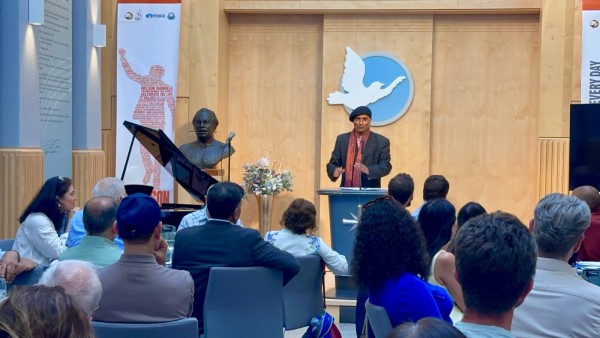
Around 50 participants attended the event, reflecting the diversity and cross-sector dialogue associated with Mandela’s legacy. The programme brought together representatives of Youth for Human Rights, the European Muslim Initiative for Social Cohesion, known as EMISCO, Soteria International and the Universal Peace Federation.
Hosted at the Church of Scientology in Copenhagen, the gathering combined formal presentations with discussions among participants intended to identify areas for further cooperation on human rights, peace and social inclusion.
Nelson Mandela International Day is observed annually on 18 July. The United Nations General Assembly established the international day in 2009 in recognition of Mandela’s contribution to democracy, reconciliation, human rights and a culture of peace.
The observance also recalls the 67 years Mandela devoted to public service as a human rights lawyer, prisoner of conscience, international peacemaker and the first democratically elected president of South Africa. Around the world, the occasion has become an opportunity for communities and institutions to consider how the principles associated with his life can be translated into practical service.
Human rights in everyday life
The Copenhagen event placed particular emphasis on the relationship between human rights principles and daily conduct.
A former member of the Danish Parliament addressed respect for human rights in the workplace, highlighting the responsibility of individuals and institutions to make conscious decisions against discrimination. The presentation examined how choices made by employers, colleagues and public officials can influence whether equality is experienced in practice.
Other contributions included perspectives from a diplomatic representative and from a participant who had met Mandela while still a school pupil. Although the speakers approached the subject through different personal and professional experiences, they repeatedly returned to Mandela’s persistence, dignity and commitment to peaceful coexistence.
Bashy Quraishy, General Secretary of EMISCO, thanked the Church of Scientology for hosting the gathering and described dignity and equality as essential foundations for cooperation among nongovernmental organisations.
He said that Mandela’s “uncompromising approach to life” remained an enduring source of inspiration for those working to protect human rights and improve relations between communities.
Jonathan Skjaltholt, representing Soteria International, reflected on the importance of personal choices in advancing peace and respect. He described Mandela as a reminder of the importance of choosing kindness and approaching difficult social questions from a broader perspective.
The evening also included a three-course summer meal and a musical performance by a professional pianist and singer. The informal setting allowed participants to continue the discussion across organisational and professional lines, exchange experiences and consider possible areas of cooperation related to education, public awareness and community engagement.
Human rights education anniversaries recognised
A central moment of the programme was the presentation of recognitions to Youth for Human Rights International and Youth for Human Rights Denmark.
In 2026, the international organisation marks 25 years since its establishment, while the Danish group marks 20 years of human rights education and public-awareness activity.
Youth for Human Rights International was founded in 2001 by South African educator Dr Mary Shuttleworth, who grew up during the apartheid period and witnessed the consequences of discrimination and the denial of fundamental rights.
Its educational work centres on the 30 articles of the Universal Declaration of Human Rights. Through booklets, audiovisual materials, classroom resources and community events, the initiative presents those principles in language intended to be accessible to young people.
The organisation’s stated purpose is to help young people understand their rights and become advocates for tolerance, equality and peace. Its materials have been used in classrooms, youth organisations, public events and non-traditional educational settings in cooperation with educators and civil-society partners.
The Church of Scientology and individual Scientologists support Youth for Human Rights and its sister initiative, United for Human Rights, as part of a broader international educational campaign.
The programme draws inspiration from Scientology founder L. Ron Hubbard, who emphasised the importance of making human rights a practical reality rather than leaving them as abstract declarations. Educational resources supported by the Church are made available for use by teachers, young people, civic organisations, human rights advocates and public officials.
The recognition presented in Copenhagen by EMISCO referred to Hubbard’s humanitarian vision and acknowledged the continued work of the international and Danish Youth for Human Rights teams.
Organisers said the anniversaries provided an opportunity not only to review past activity, but also to consider how human rights education can address present-day forms of discrimination, social exclusion and intolerance.
Connecting local initiatives with European values
Ivan Arjona, representative of the Church of Scientology to the European Union, the Organization for Security and Co-operation in Europe, the Council of Europe and the United Nations, said the Copenhagen gathering reflected a responsibility shared across European society.
“Nelson Mandela Day reminds Europe that human rights are sustained not only through laws and institutions, but through the decisions people make in workplaces, schools and neighbourhoods,” Arjona said.
“When diplomats, elected representatives, religious communities and civil-society organisations meet around the same table, they strengthen the culture of dialogue and civic responsibility on which human dignity depends.”
The gathering reflected a wider European discussion about how to ensure that the rights established in international instruments are understood and applied locally.
While governments carry the primary obligations arising from international human rights law, schools, employers, faith communities, associations and individuals also influence whether people experience equality and respect in their daily lives.
Participants considered education an important part of that process. Knowledge of fundamental rights can help individuals recognise discrimination, understand their responsibilities towards others and participate more effectively in democratic and community life.
Mandela’s own words provided the closing reference point for the evening: “To deny people their human rights is to challenge their very humanity.”
Participants concluded the gathering with a renewed commitment to cooperation, education and practical initiatives capable of translating universal principles into lived experience.
About Youth for Human Rights International
Youth for Human Rights International is a nonprofit educational initiative founded in 2001. It teaches young people about the Universal Declaration of Human Rights through educational publications, audiovisual resources, public events and youth-led activities. Its purpose is to encourage understanding of fundamental rights and foster tolerance, equality and peace.
About the Church of Scientology in Europe
The Church of Scientology, its missions, affiliated groups and members are present across the European continent, supporting community initiatives in human rights education, drug prevention, literacy, moral education and volunteer service.
Inspired by the humanitarian work of Scientology founder L. Ron Hubbard, these activities are carried out in cooperation with educators, associations, public institutions and civil-society partners.
Recognition of Scientology churches and organisations as charitable and bona fide religious bodies continues to expand through administrative, judicial and tax decisions in a number of jurisdictions, alongside their ongoing commitment to education, prevention and community betterment.
Media Contact
Organization: European Office Church of Scientology for Public Affairs and Human Rights
Contact Person: Ivan Arjona
Website: https://www.scientologyeurope.org
Email: Send Email
Address:Boulevard de Waterloo 103
City: Brussels
State: Brussels
Country:Belgium
Release id:47427
The post Copenhagen Mandela Day Gathering Brings Diplomats and Civil Society Together for Human Rights appeared first on King Newswire. This content is provided by a third-party source.. King Newswire makes no warranties or representations in connection with it. King Newswire is a press release distribution agency and does not endorse or verify the claims made in this release. If you have any complaints or copyright concerns related to this article, please contact the company listed in the ‘Media Contact’ section
Disclaimer: The views, suggestions, and opinions expressed here are the sole responsibility of the experts. No Economy Lane journalist was involved in the writing and production of this article.
